Book Review
Gwendoline Riley
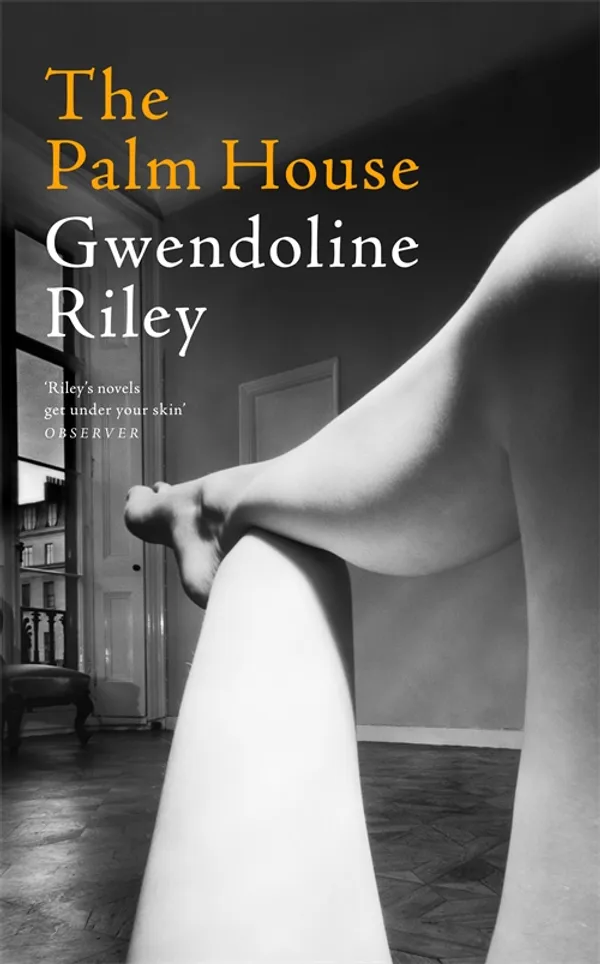
The Palm House
Riley’s seventh novel displays all her skill in presenting the bare facts of a scene, artfully arranged, with one killer line of opinion. She is an expert in giving just the right amount to damn them all.
We grow old, we grow old. Readers of Gwendoline Riley’s slim, sharp, viciously precise novels, from her 2002 debut Cold Water onward, have spent nearly a quarter of a century in her intricate, reiterative worlds of emotional torture in that most common of settings—the family. In her late 40s now, Riley shows signs of mellowing in her seventh novel The Palm House. I suspect much will be made of its slightly less scathing tone, slightly more compassionate outlook, the hints of possibility – dare we say hope? – discernable in the ending. Part of it is that Riley’s focus has shifted in this book from family to friendship, where a person has agency and choice. The new milieu brings a kind of freedom, a little space. But this is still a distinctly Rileyean space, which is to say, there is the sense that her characters are idling on the plinth beside the guillotine, rather than secured by the pillory, awaiting the swift drop of the blade.
Structurally The Palm House consists of five sections, multiple chapters within each, a number of time and place shifts, which in a relatively short novel could feel ungainly or whimsical. Riley establishes her worlds with deft authority – “In summer we went away” one section opens – but it is her lucidity that binds the disparate parts. There is no grand arc to the narrative: the scenes and sentences are where she excels, pushing back against classical notions of causality in which a character’s actions have consequences and thereby imbue a story with meaning. In Riley’s novels, people who behave atrociously often go unpunished or unchecked, while those who have to endure them pay an internal cost. Her modus operandi is to show us the damage, in excruciatingly accurate scenes, without fuss or excess, a mirror held up to the world, that says, very clearly: this is life.
But we’ll get to the parents in a bit. The Palm House is frontloaded with a story about work colleagues, specifically that of the writer-narrator Laura Miller and her friend Ed Putnam, editor of a London literary magazine, Sequence. After a year wilting under a clueless managing editor – the self-titled Simon “Shove” Halfpenny – Ed quits his beloved magazine, feeling very sorry for himself in the process. Initially sympathetic, Laura begins to get frustrated as her friend’s depression lingers. “His real decision, it seemed to me, was to suffer. Nobody understood. Everybody fell short. Surrounded by friends, and goodwill, it was as if he were a half-mad prospector, shaking a pan full of silt.”
Her judgement of Ed reminds us of earlier novels and the composite first person narrators who resist and protest what they consider to be excessive emotional need in other people. The issue of need is writ large in Riley’s work from the beginning. In Cold Water, the protagonist, 20-year-old Carmel, tells us, “What I don’t like is when people need to make others complicit in their big lie. When they need an audience to bore or someone to push around.” The subject manifests again and again in future books; needy mothers, needy lovers, needy friends and siblings. Even the domineering aggression of Riley’s father figures is a type of need: look at me, answer me. In these familial relationships we cheer as the narrators call out the emotional manipulation, so obvious and repellent. The dynamic in The Palm House is more nuanced. Ed seems like a decent guy, genial, intelligent, kind to his own father, a little wilfully down on his luck perhaps, but not in a way that seems overtly demanding. “‘I wasn’t the only friend he ended up barracking,’ Laura says. ‘Did we not agree forcefully enough?’” But just when you think she is being unnecessarily cold, the scrutiny morphs into a searing insight on the root of human suffering: “Was it just that we weren’t him, so could never hope to feel the pain of any situation as precisely as he did?”
Enthusiasts of Riley often cite the unflinching gaze and honesty of her novels, but what they are actually responding to is her style. A first-rate stylist, her prose is meticulous and weighty; every line commands attention, many contain multitudes. Her dialogue is stripped back and often funny. Drinking with Laura in an old haunt, Ed reminds her that they used to sit at the bar counter and “do lines from The Waste Land at each other.” The wit is in the detail, in the verb choice, the preposition: do lines … at each other.
Riley’s skill is to present the bare facts of a scene, artfully arranged, with one killer line of opinion. She omits much more than she includes, an expert in giving just the right amount to damn them all. There is a singularity to her voice, an authenticity not unlike what her protagonists strive for in their lives, a shunning of artifice, an abhorrence of sentimentality, what Wilde described as the luxury of an emotion without paying for it. Because of this, her protagonists are constantly attuned to performance and pretence: the pantomime villain buffoonery of the fathers, which conceals, barely, an even worse character beneath; the martyred suffering of the mothers; the delusions of grandeur in the tortured artist lovers. Her 2021 novel My Phantoms warns us about the dangers of pretending: “That brought a flush of shame. Which is what you will get, of course, if you behave as if things are other than they are.”
In The Palm House we are given a mild introduction to this perennial theme through Ed’s work woes: “I used to feel, at those times, talking to him, as if I were trying to climb a steep sand dune, while he stood on the crest: exultant in his misery.” The excessive use of “he said” during these conversations reinforces the idea that Laura is under siege and also highlights the artifice of conversation, the gap between what we say and how we feel. There is more painful performance with Shove and his blatant inability to understand the magazine he manages: “One of his editorials had begun, ‘What is it about dogs?’ Another, ‘April is the cruellest month, as the poet T. S. Eliot once famously wrote.’” In later sections Laura dates a man called Lawrence: “He lapsed too easily, for my taste, into anecdote, but that’s actors, I suppose.” Even her own performances are analysed, such as her interactions with her friend Katherine’s children: “There were those of us without our own who might overdo our delight.”
None of these come close, however, to the ugliness of the performance in the standout chapter of the book, in which Laura recounts, in brilliant, brutal prose, her 90s teenage obsession with a famous English comedian that builds to a horrendous sexual encounter in the man’s grand and filthy house in Kilburn. It is the longest chapter of the book, the clear emotional core, galvanised with tension and nestled like a bomb in the comparatively diffuse sections of the surrounding narrative.
“Because he was sensitive; because he was alive to beauty and cruelty, Chris Patrick moved about the world in a state of near-ecstatic personal pain.” The chapter begins with this grimly ironic description of the comedian by an adult Laura (with horrible echoes of Riley’s father characters, so proud of their strength of feeling) before switching to the perspective of the fifteen-year-old girl who listens religiously to his late-night skits on Radio 4. She watches him on television too, scours magazines like Melody Maker for news or interviews, attends his sold-out gigs with a legion of other teenage girls who wait at the stage door in the hope of an autograph on their expensive programmes and Doc Martens. Laura goes further than most, sending him cassette recordings about her life that ultimately get her singled out for attention, along with her slightly older friend Anna. The word grooming isn’t mentioned. As ever in Riley’s work, the grotesque is in the detail: Chris Patrick’s faux Dickensian cheer, the free tickets and drinks and backstage passes, the rides in his car, the jiggles on the knee. It’s all just a laugh – “Wotcha!” – because if the young girls are laughing, then it can’t be exploitation. Until he splits them up, inviting each to his house on different days.
Laura gets the train from Liverpool thinking she’s in control, in the way a child thinks they’re in charge of a house when their parents are away: “I had made this happen, I thought. I had sent those tapes. I had picked him out.” Chris Patrick opens the door in typically charming fashion: “I forgot you was today.” He manages to fit her in all the same, after a fortifying line of cocaine, steering her down the hallway to the bedroom with his hands on her shoulders: “Then he chanted my name, as if I were a footballer about to take a free kick: ‘Lau-ra! Lau-ra! Lau-ra!’” Once she has undressed he gives her an anatomy lesson: “‘And them’s your labia,’ he said. (I didn’t know the word.) He said they were so small they looked ‘like a little pound coin’. He was frowning. He looked humourless.” The man proceeds to video her without her consent, and on the jaunty walk back to the station afterwards, blithely gives her instructions for dealing with thrush. Just when you think it can’t get any worse, Laura recalls her mother complimenting her new underwear in advance of the trip: “Ooh,” she says, in what may or may not be a joke, “lucky Chris!”
And so, to the parents. It wouldn’t be a Riley novel without them. Few writers can return to characters so frequently and successfully. McGahern’s tyrannical fathers, O’Brien’s martyred mothers. Riley is in the same league with her ruthless chronicling of parental deficiency and narcissistic need. In The Palm House they feature less prominently than other novels but still leave their mark. The father is kept to the margins, not appearing until the book’s last quarter, in a chapter outlining his death (naturally) that opens with mordant humour: “As for my father.” What a treat, I found myself thinking. Such are the delights of Riley’s world.
If portraits of the father as a mean-spirited bully remain fixed over the course of the novels, there is more light and shade with the maternal figures. The mother in My Phantoms is to be pitied as she nears the end of her life, having never really lived. In Sick Notes, Riley’s sophomore novel from 2004, the protagonist Esther feels guilty about the way she and her brother treated their mother: “She grew us in her stomach then we ate her alive.” The Palm Tree features both past and present scenes of the relationship. In the present, Laura, on the cusp of buying a flat in London, has enough distance from her mother to maintain a pleasant surface relationship: “She and I did much better on the phone. I could get on with other things then, which seemed to take the pressure off … We didn’t have conversations that went much deeper than this, but they kept the plate spinning in their way.”
The past is more complicated. Aged six, Laura and her mother move in with Laura’s grandmother, who can’t engage with her daughter either: “She and I seemed to have reached the same conclusion: that this show ran regardless.” Back once again to performance, to what the kids call main character energy, to what Riley herself in My Phantoms likened to a lone girl on a stage singing her plaintive tune to a captive audience.
At least at her grandmother’s Laura has an ally. A decade later, reeling after the “visit” to the comedian’s house, she finds herself alone. The mother’s self-centredness and perverse inability to tell the difference between an adult and a child preclude any hope of sharing the ordeal: “I wouldn’t have thought to tell my mother. I’ve no idea how she would have reacted […] she might have been envious. Or scornful. Or not believed me.” It is hard to describe the feeling of aloneness evoked by these lines, but they go deep into the void, far beyond the personal, into a universal longing, an ache for a connection that can never be.
That Laura drags herself out of the abyss, to live a life of the mind in London with a place of her own, thoughtful friends and clever colleagues, perhaps the prospect of a long-term boyfriend (if he learns to lose the anecdotes), is cause for hope. In Joshua Spassky, Riley’s third novel, the narrator admits: “All I was good for were petulant gestures against despair.” Laura, in marked contrast, has lost the petulance of those bitterly intelligent, bitterly disgruntled 20-something girls. The Palm House is all the better for it. As for Riley herself? Still shrewd, witty, acerbic, which is to say, not even vaguely ready to wear the bottoms of her trousers rolled.
If you enjoyed this article, please consider supporting our work. You can also subscribe to our newsletter here: