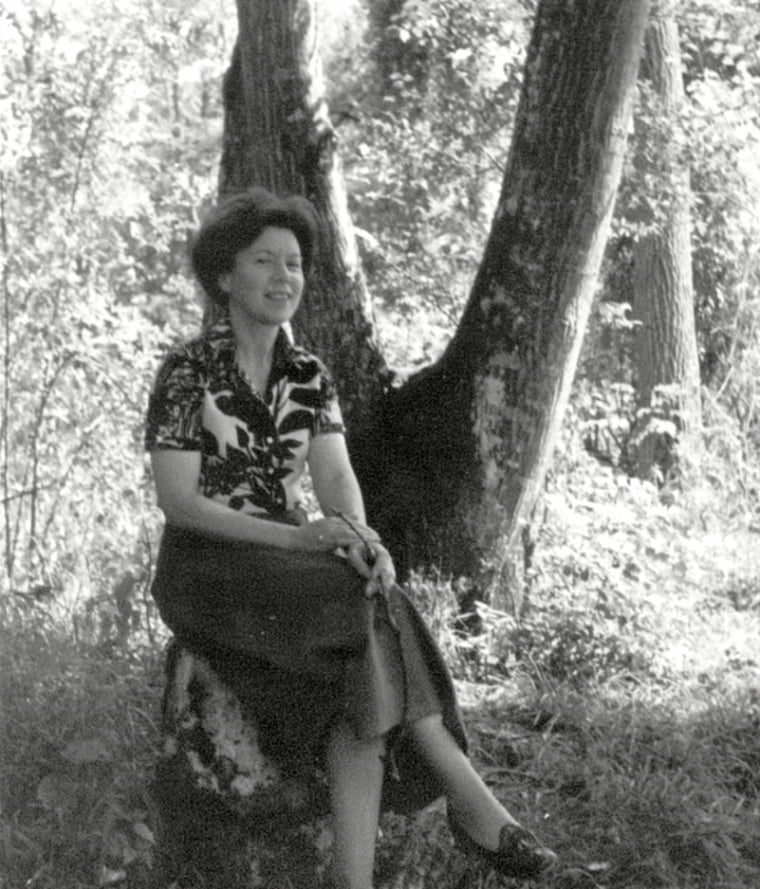
Fog Constellation (Approaching): An Interview with François Bonnet
Ian Maleney

François Bonnet’s work is strikingly multi-disciplinary and collaborative. As a composer and electroacoustic musician, often working under the alias Kassel Jaeger, he has been releasing music for almost twenty years. Time and again he has built uniquely rich, immersive atmospheres from manipulated field recordings, layered with personal approaches to the guitar and synthesiser. He has frequently collaborated with figures like Jim O’Rourke, Oren Ambarchi, and Stephen O’Malley, and worked closely with the groundbreaking composer and electronic music pioneer Eliane Radigue during the last decades of her life.
As the director of INA-GRM (Institut national de l’audiovisuel/Groupe de Recherches Musicales) in Paris, one of the world’s leading institutions for avant-garde music and the spiritual home of musique concrete since the middle of the last century, he has helped to re-invigorate that institution and open its doors to a broad range of adventurous musical artists working in a diverse set of traditions. He has also been pivotal to the success of the Recollection GRM series of releases, which, since 2012, have made some of the most innovative electroacoustic work of the 20th century available again to today’s listeners. That effort continues now with the Portraits GRM series, which situates contemporary artists within that longstanding GRM tradition.
Bonnet is also the author of several books, which together form one of this century’s most exciting investigations into the natures of sound and listening. His first book, The Order of Sounds: A Sonorous Archipelago, was published in English by Urbanomic in 2016, and was described by Drew Daniels as “nothing less than the retheorisation of sound as such.” It remains an ambitious and rewarding text. Since then his writing has become ever more allusive and provocative, even as the theories in play become fuller and more far-reaching. This practice has so far culminated in The Music to Come, a manifesto of sorts, which was published by Shelter Press in 2020. There is, to my mind, no other writer who so deftly threads the needle of literary work and abstract musical production.
Ian Maleney
You’re a musician, a composer, someone who works with sound. What then is the force that brings you to the page? Is there something that compels you in that direction? Why do you think you revert to words?
François Bonnet
I’ve enjoyed writing forever, I guess. At school, when I was writing things, like you do as a task, it was most of the time very well welcomed by the teachers. So I felt that writing was something I was good at. I felt this kind of taste for it. Though, I never said, oh, let’s write to fulfill a purpose. It was more that writing was part of my skill set. Then the tasks became more and more theoretical, moving to philosophy class in college, towards university. I got deeper into research, almost as a side activity, because my first pursuit was more into sound engineering. But I was already developing some theoretical aspects on that. And then some of the teachers at the sound engineering school said “you should go to university, do a master’s degree in philosophy of art”. So it’s a practice I always carry with me.
But maybe more specifically, I also developed a practice as a musician. For a long time, for me, it was something that was really split. But split in this idea that they were like exploring maybe the same thing, but with different means and on a different level. And I still think it’s something that I’m pursuing, even though sometimes it can be a bit more interleaved, but I still think it is two separate activities, very much so.
Ian Maleney
As two separate activities, do you ever find that they’re in tension with each other? Or do you find that they mostly just complement each other?
François Bonnet
I mean, I think the true answer is maybe already deep in what’s at the centre of my works. It’s a relationship to language. And I do think, and that’s something I tried to propose in The Music to Come, but that was already latent in The Order of Sounds, is that this kind of exchange between language and discourses and perception is at the same time very rich and sometimes very problematic, in terms of not being balanced. There is always cannibalism from the discourse toward the perception.
And for me, writing on theory with language is something that I can explore because again, it was part of my skill set. I felt comfortable doing that. Then music was more like an obscure investigation with no method whatsoever, unless maybe the method I learned as a sound engineer just to shape the sounds. I had classical training with piano, but it’s something I dropped during my teenage years. And so when I continued the music, it was very much getting rid of all the rules and exploring as a free field. And I think this kind of ingenuity towards sounds, towards exploration, this raw, savage exploration was a good counterbalance to a very methodological, theoretical aspect.
I think sometimes, especially in academia, in music, some musicians, in order to justify or to elaborate their musical work, are fishing way too much into the language and self-regimentation, and the music itself is no longer an experience that is to be shared. It’s more like a demonstration of a pseudo-theory about something that’s supposed to be perceived in the first place. And to the point that—in the extreme way of music as a thought experiment—it was almost not necessary to be listened to. And for me, I think it was very much about a rhetoric and legitimisation of a practice of a cultural and social system, and not so much about the experience, shared and researched through composition and the assemblage of sounds.
Ian Maleney
I was wondering if there are any particular early experiences, either from childhood or earlier in your life, that expanded your concept of what listening could be, or that have stuck with you in some way? Experiences that you kind of go back to as originary experiences of listening.
François Bonnet
There are always a couple of examples I give. It sounds really like cliché, but it’s true, so… When I was a child, my father was working quite late. And when we were little, we were going to bed before he arrived. My mother was working a lot as well but she was coming home a little earlier, making us dinner and then putting us to bed with my sister. Before my father was coming from work, later, she was taking some moments for herself and she was learning to play the Gnossiennes by Satie. And I have strong memories—she was doing it like five, ten minutes a day. She didn’t have much time. So I remember being in bed with just a ray of light below the door and downstairs listening to this piano coming up.This is the first, really strong impression for me of sound. It was this sound in the distance.
I remember also, summer, as a kid again, on the swing in the backyard of my grandmother’s house, next to a road. And I remember these motorcycles. I was living in the countryside, so all the kids then used to have these super loud motorcycles, these tiny motorcycles. And you could hear them coming from hundreds of meters away, and you would get this Doppler effect as the pitch starts changing before the distance, and all this filtering. And it was quite fascinating for me.
These experiences were always—even as a kid, which is strange—very mixed with a sentiment of nostalgia; things that vanish and that are already far away or unreachable. And I think it gave me a strong impression that has always been quite in the centre of what I’m trying to explore while making music.
Something also very simple and very naive is that I started to do my own music because it was the music I wanted to listen to. It’s not a job, it’s not an exploratory journey towards ideas, concepts or cultural references. It’s the music I dreamed, and I tried to achieve it. And I’m still doing it because I can’t achieve it. So there’s always this modality of something that’s unreachable.
Ian Maleney
I grew up in this very remote place in Ireland, like very rural, completely silent at night. I would hear horses in the distance, or cars miles away. Some of my most formative early experiences of listening, and then particularly of recording, were of trying to capture the sound of horses hundreds of meters away. And obviously failing.
I’ve since realized that for me, it wasn’t so much like hearing other music that kind of pushed me in this direction. It was listening and then trying to record. And it was only after doing that sort of practical exploration that I started to find, and respond to, music that maybe was trying to do something similar. And I wonder if it was the same for you—was it the experience of trying to do something with that listening experience that pushed you towards these maybe more unusual sounds?
François Bonnet
For me, it was more really like following a path that was there, but underlying. I mean, I learned the piano like many children. Then I got tired with all the rules linked to this practice. Then a friend of mine started a band, so I joined the band because I was still wanting to play music. So there was always a feeling that music was a possibility. Also, it was pre-internet, so for discovering new music, it was more about scraping CDs, going to the library to check some stuff. I randomly built a very strange taste. I can’t explain why I have this taste and why my sister doesn’t have it, for example. It’s kind of a mystery. I remember taking My Bloody Valentine randomly, or maybe because I’d seen the name in the newspaper, and then starting to go into this box called “New Music” that nobody was looking for, and just randomly taking François Bayle or Alfred Schnittke or John Cage. And some of them stuck. I still listen to François Bayle, I don’t really listen to Alfred Schnittke. But I could have, and it has just built up like this.
Ian Maleney
Recently I was at a screening in London of some film material related to Derek Bailey, and in one of these clips from his archive, he was saying that the music he was making—and the music that he was interested in listening to—was music that was being developed instrumentally. Obviously Bailey’s work is quite different to what you’re doing, but I kind of thought there was some sort of echo there in terms of a music that could be developed only through the material, through the recorded material that you’re working with. That it’s through a sustained engagement with the sound itself rather than, as you say, a theory or a framework, that brings the music out.
François Bonnet
This quote, especially for Derek Bailey, is so linked to his own practice and his own journey through music. For me, composing music is composing the conditions of possibility for the emergence of music. And there are several possibilities through this field. For me, it’s more about, what are you really doing when you’re practicing your music? And if, as with some bad aspects of academia, you’re trying to demonstrate a theory or to make your pieces a proof of concept—or in some mainstream music, trying to maximize the captivation of the audience through a recipe—then you’re not really exploring the possibilities of music. You’re just following rules or trying to make business.
But if you’re really into the sincerity of practicing music because you want to summon it and you want to try to activate it, and if you’re ready to fail, then I wouldn’t make such a difference between the instrumentalist approach or a more studio approach.
But the notion of instrument is complex and can be contradictory. And in the Western tradition at least, the instrument has been, I think, not the instrument itself, but the concept around the instrument, and that brings with it some problematics. For example, the super specialization of each instrument. The trend towards the beginning of the twentieth century was always to specialize and to optimize the instruments and to rationalize the writing in order, not to focus on the sound generation itself, but to focus on the musical discourse. All this with very specialized and optimized devices.
Since then, the sonic potentiality has been opening up towards extended techniques, as we say. So now it’s kind of a paradoxical state where you’ve got these very specified instruments, for a certain range, that are exploding into different possibilities because the way of thinking music has changed. And at the same time, you still have a very classical approach of what a good musician should be. And you still have a big pressure on the virtuoso approach in classical music, but also in academic contemporary music.
For me, the instrumental notion is explosive because it can be at the same time very innovative, but it has always carried some conservatism, in a way.
Ian Maleney
One of the other things that Bailey says in that in those pieces is that he edited this book about improvisation, and made a documentary about improvisation, and he said that in the process he didn’t learn that much about improvisation, but he definitely learned a lot about words—the ways that people talk about their own practice. There is this question of defining what you’re doing, and how do you communicate what you’re doing to other people outside of the actual performance? Do you think you’ve developed your own language for this over the years? Have you found a comfortable way of describing what you’re doing, to yourself and then also to other people? Have you found words that feel suitable to what you’re doing?
François Bonnet
Not really. And less and less, because people read what they want and understand what they want. For me, that’s the main thing about language. It’s not a pure transaction of information. It’s a complex situation of translating and decoding, but not with the same algorithm. And so there’s always this kind of confusion. Always with words, especially in art and in experiences of perception, you always give images and give a cloud of what you perceive. How you represent a situation is always a sketch of what it is. But if you transmit this to someone that acknowledges that, then you’ve got freedom. It can also lead to poetry.
If you take a very dogmatic approach, and you say, this is as it is, and this is what you should do, and this is like this, and the experience is not backing it up, then you’re trying to twist the reality. You build a narrative around it, but in a very dishonest way, I would say.
When I’m trying to talk about what I’m doing, I try to explain what idea I had in mind, what material I’d used, but I’m never trying to describe the effects of what I’m doing, because that’s totally for the listener’s side. It’s true that, when I’m making music, I’m my first listener, but as a first listener, I always take into account future listeners. And, in musical composition in general, it’s not always the case. For me, composing is like organizing traps. I channel the listener, and then I give them freedom. For me, the music is an event. It’s something that is happening. And sometimes you need to channel the listeners into a place where they will be comfortable enough to engage. My music is not confrontational; you go alongside it, and then maybe you can have this kind of moment of listening to something. You’re not decoding anything, you’re just in the experience of the moment. And sometimes in order to achieve that, you need to create a comfort zone in a way. That’s my way of doing it, at least.
And I think one of the great examples of that is In Search of Lost Time, in Proust. Because you’re always attached to the micro-narratives and say, well, okay, what’s going to happen? You’re caught with these little stories, with the characters. And then you follow the pages and pages. But basically, you’re trapped into this kind of huge span of time that just slowly, with this porosity, contaminates you in a way. And then the real work of art in this book is to give you this thickness of events and this depth that is really the subject of the book, I think. But then you’ve managed to go through these thousands of pages because you want to know what’s on the next page and the page after that.
Ian Maleney
You’ve used Walter DeMaria’s ‘Lightning Field’ as a kind of reference or analogue for your own work in the past, because it is a work that is about the ‘release of forces.’ I really like the idea of ‘release’ as opposed to its opposite, which is capturing—a more common word when it comes to recording. This idea of something being released seems to me a wilder and potentially more transformative moment. I can see quite clearly how that applies to music, but I wonder, when it comes to language and when it comes to writing, do you find that that’s a space that you can access in that way? Or is it a different kind of practice altogether?
François Bonnet
I think it’s fundamentally different, but maybe an attempt to do so is if you look at the difference between my last book, The Music to Come, and the first book, The Order of Sound. They address the same subject, in a way, but they’re very different. You’ve got first something that is very argumentative and with lots of references and with a logical construction in order to make the ideas I defend acceptable, because they are backed by all this theoretical apparatus. It’s like a demonstration, in a way, that you can agree with, and maybe it’s not perfect, but at least I try to make it consistent.
And, on the contrary, the last book is a short proposition that is almost throwaway. And I think it activates a very different kind of reading. The first one is trying to understand someone’s intellectual journey and see if it matches your own, or if it resonates and feeds your own research. The other is more about getting little bubbles of ideas that may be inspirational.
And for me, the real mistake in philosophy and theory is not to be right or wrong—it’s to not bring any new ideas, any new concepts. It’s okay to be wrong. It’s okay to be pushed back by others because they don’t agree. But people are so conservative and so afraid of being wrong that they don’t try. And so, in this last little book, there’s very offensive stuff if you think deeply about it. And I didn’t get so much reaction. I mean, I got the reaction of people saying, oh, it’s activating something, that’s great. But not so much from people saying it’s irritating, or it’s very offensive and it’s wrong. It’s very strange.
The next step would be poetry, I think. Poetry is kind of a space in language where you can play with it. Like, with Walter de Maria’s piece, you basically set things up, but then once things are set up, you can only hope. And you don’t know where the art is, if it’s in the hope, or if it’s the event of the lighting strikes. I think it’s a great piece for that. You don’t really know where the art resides. And I think it’s this kind of thing I try to achieve. Where is the music? It’s there, definitely, but you can’t really locate it in one node, one possibility. It’s something that’s around. And that’s why, in the book, I try to be a bit radical about what music can do, what only music can do. I think a lot of musical production could be assimilated to a text in a way. And if it can be assimilated to text, then, somehow, it’s a text.
Ian Maleney
It’s interesting what you say about not getting kind of pushback, or not getting kind of a negative response from people. The critic Dave Hickey has this great piece about the photos of Robert Mapplethorpe. He’s writing about this conservative senator from Iowa, who takes offense to Mapplethorpe’s very explicit photos of extreme sexual acts. And the response from the art world at the time was to say, no, these photos are not offensive, they’re beautiful. And Hickey’s whole point is like, no, the guy from Iowa is completely right: they are offensive, they are transgressive. They’re meant to be. They might be beautiful, but that’s not all they are. They’re also unsettling and strange and far outside of the norm. And you can say they’re beautiful, but maybe that’s just a way of protecting yourself from the consequences of seeing what he’s really put into these photos.
François Bonnet
It reminds me of an experience I had when I was in a master’s degree in aesthetics in university. One of our teachers, I think it was Marc Jimenez, a famous theoretician, showed us a piece of art by a Chinese artist, Xiao Yu. And basically the artist took a foetus and he sewed wings on his back. And Jimenez asked us, do you find it shocking? And almost nobody found it shocking. I said, no, it’s not shocking. Just one student who said, yes, it is shocking. It’s a human being—you can’t play with their body like that. And people were like, you’re just too soft.
And I am reminded of it a lot because I felt I bragged that day. I felt I was dishonest. Saying I wasn’t shocked was more about saying I’m open-minded, not about judging the piece. Because it is shocking. I still remember this work. It’s an unborn baby—the guy just put stuff on it, and put in liquid, and called it art. And I don’t discard it as a piece of art, but I think it’s not neutral. It raises ethical questions. And I would totally be okay if someone says it’s problematic. I can think about whether it has validity or not as art, but, as a student twenty years ago, I should not have said, yeah, it’s perfectly fine. It’s a hint about how people are passive and how people are so afraid of not being on the right side.
Ian Maleney
You’ve written quite a bit about something I think many people would stay away from, which is the afterlife, or questions of sounds that are not real as such, or that cannot be proven. And I think that’s an area that people are afraid to go near, whether they’re afraid to look stupid or afraid to look naive or something. But for me, there’s this connection, and you make it very early on in The Order of Sound between disappearance and memory, and how sound is connected to both of these things.
François Bonnet
The thing I’m really interested in is the mechanics of representation of the invisible, of the inaudible. Because they’re ambivalent. When you put words on perception, you consolidate it and somehow you lose the immediate link to the perception. But also words can, with poetry, extend and dramatize the world – if you use the word of Bataille – or enchant it in a way. And that’s why I’m always very interested in figures of mythology, this constellation of things that remain. That’s something I address in The Infra-world very much—how your perception is always putting order on your sensation, so that you can navigate in the world; to speak the world, to describe it, to exchange it, to communicate with others about it. To make it a place of transaction. But there is always what remains, and what constitutes a kind of background of the experience. That is active as well.
And it’s something that’s linked with the After Death book, where I try to make this distinction between the inner self, and the self that is projected and which is part of the social environment. I always find fascinating the representations of unreal worlds, of unknown sounds, unseen forces, where you can sometimes have this pareidolia effect—how you convince yourself, and how you put the unknown with the fantasy back into the known world. You build a narrative, you build a fiction, but you build something that is solid, compared to the evanescence and the fluidity of the perception, especially in the case of sound.
Ian Maleney
So much of my own aesthetic and political formation is based on an idea which I think you echo at the end of The Music to Come, when you say that “the role of art is not to confirm a vision of the world, but the disruption of any such vision.” To me, this expresses a kind of fluidity, I suppose, a desire for fluidity towards the evanescent, towards things that are outside of our control, or even our perception. It’s also a kind of a refusal to take what comes as natural, to take our own ordering of things as natural. Or God-given, to use a stronger word. It’s the belief that things could always be different. Does that thought continue to kind of inspire you, in terms of what comes next and where you want to go?
François Bonnet
I think so. Maybe you can sum it up by having the consciousness that the world is fabricated, especially the human world. It is fabricated and it could have been different. It might need to be different. So there is, of course, political stakes there. In practical terms, the world is a construction. Some strategies in art are rhetorical and are just feeding this social construct, but very few try to escape from it. Few are offering you experiences on other levels than the rhetorical. So now, in the field of rhetoric, in the field of cultural arguments, how can we promote that? It would be like folding back, using the world to fight the world, but in some way that would be very comprehensive. It feels maybe a bit obscure.
Today, I’m very interested in the notion of romanticism that has been totally discarded. Maybe for good reason, if you think of the romantic artist as this kind of egomaniac, demiurgic artist. But I think by discarding it we lost sight of a very interesting aspect in romanticism, which was the acceptance of being overwhelmed by the surroundings. While now everything is controlled, everything is dialectical, everything is a fiction, history, documents. And of course, there’s a lot of knowledge and there’s a lot of arguments done through this process by contemporary art, which are very interesting because they’re reshuffling the values.
But I think there’s also something else that can have very strong political stakes too, which is being okay with being overwhelmed by the unknown. The unknown for me is something you didn’t rationalise or put words on. And we know so little. If you think about quantum theory that’s so hard to grasp, but also so fascinating—that, as far as I understand it, physics always needs observation to be actualized, for example.
Maybe we are in an era where we are holding too much onto our own cultural values. And as a complement, as an alternative that can be very fruitful and fertile for the rest, I think we should go back to some elements you can find in romanticism, especially around the acceptance of being overwhelmed. Partaking of something that you can’t really grasp.
There’s of course a lot of traps, mystical traps. You’ve got the sublime trap, which is not a total trap, but raises questions. The transcendence trap. I still have in mind this distinction by Deleuze and Guattari about philosophy and religion—that the philosopher is building ideas through the immanent, while the monk or the priest is building theory and ideas from the transcendent. I think there is an immanent romanticism basically. And I’d like to explore that, but it’s tricky.
Ian Maleney
You’ve worked so much with Stephen O’Malley and Sunn O))), and that is obviously an aspect of what they do in terms of creating this kind of ritualistic space around the performance, to create the possibility that someone might be overwhelmed. Someone can put themselves into the space where their defences go down and they can actually experience the thing as close to directly as it’s possible for them to do. As you say, it is a place full of traps because it can look silly, it can look strange, or it can seem regressive in some way – irrational or something – but it does seem to me a necessary part of the artistic experience. To accept that level of suspension of disbelief, and allow yourself into something erases your identity, or overwhelms you in some way.
Francois Bonnet
Yes, exactly. You have to embrace heterogeneity. Then you have to embrace the possibility that some contradictory elements are still building in your practice or your theory. And I think it’s a false idea to think that an art or a theory is strong because it’s super consistent and is super integrated. I mean, look at Derrida, look at Deleuze and Guattari—there’s fertile theory in the cracks, and in the contradictions. I’m very happy to be disproven or to be discussed, because it’s obvious that there’s cracks and mistakes, but if it helps the next person to go in this kind of direction, of trying to deconcentrate, to unfold and to enrich the human experience, even a tiny bit, it’s fine. That’s brilliant. It’s such rich ground, I think, and there’s so much to do.
Click here purchase the issue in which this piece originally appeared, or subscribe to receive all future issues as soon as they're published.
You can subscribe to our infrequent newsletter here: